
Eileen Gu's Training & Health Secrets: 4 Habits Behind Her Olympic Success
The 4 Habits Behind the Most Decorated Female Freestyle Skier in Olympic History
What does Eileen Gu's training routine look like?
How does a 22-year-old model, Stanford student, and three-event Olympic skier manage to do it all at the highest level?
A Sneak Peek into Eileen's 4 Health Secrets:
- A sleep ritual so disciplined it started in childhood
- A multi-sport training approach that builds a body most athletes never develop
- A mental rewiring practice rooted in neuroscience
- The nutrition recovery that changed both her relationship with food and her performance
Keep Reading to Learn More …
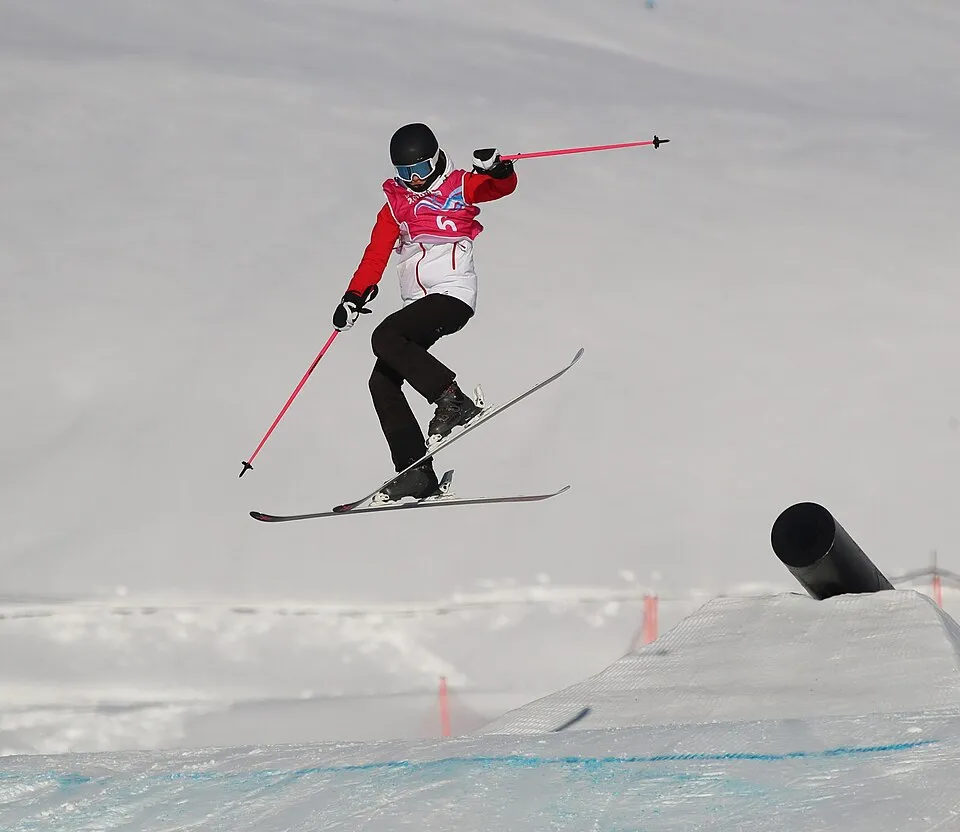 Eileen Gu competing during Olympic freestyle skiing competition.
By the time the Milan Cortina Winter Games wrapped up in 2026, Eileen Gu, 22, had achieved something no female freestyle skier ever had before. Two silver medals, added to her two golds from Beijing 2022, made her the most decorated female Olympic freestyle skier in history.
Off the slopes, she models for Louis Vuitton, Victoria's Secret, and Porsche—all while balancing an elite athletic career with her studies at Stanford.
She competes across three Olympic disciplines: halfpipe, slopestyle, and big air—in a sport where a single mistake at speed can end a season. Or, even a career.
So how does she do it?
The answer isn't one dramatic secret. It's four quiet habits she's been practicing since childhood.
_2020.DgdIJ31v_V2KE7.webp)
Secret 1: 10 Hours of Sleep, Every Night
Most people treat sleep as whatever's left after everything else gets done. Eileen Gu treats it as a training session.
She sleeps 10 hours a night. Not as a luxury. As a non-negotiable.
Her mother, Yan Gu, built this habit deliberately from Eileen's earliest years. "When she was a little girl, I would let her sleep up to 15 hours a day," her mother told reporters. "Then 13 hours, when she was a primary school student. Now she sleeps 10 hours a day. Without adequate sleep, how can one have the energy to play?"
Eileen herself has been direct about why sleep matters so much for her specifically. "I think that for me, especially as someone who competes in three events, it can be really tiring emotionally, going through those adrenaline peaks and crashes, even more so than physically," she told GQ. "That's while training, and that goes to a whole other level while competing."
The science backs this up. Studies consistently find that adequate sleep improves reaction time, motor learning, recovery, and decision-making. All essential in a sport where a fraction of a second can determine whether a landing is successful.
For an athlete executing complex aerial maneuvers at speed, the neuromuscular coordination required doesn't just come from practice. It comes from the hours of quality sleep that follow practice, when the brain encodes and strengthens those movement patterns.
To track her sleep quality, Gu uses an Oura Ring. She's mentioned it directly in interviews, noting that she tried an Apple Watch first but found it too much:
"Recently I got this Oura ring. It tracks my sleep and exercise. I've worn an Apple Watch before and thought it was too much. I like that the Oura is super-low key — subtle."
— Eileen Gu
The Oura Ring tracks sleep stages, heart rate variability, body temperature, and readiness scores that tell you how recovered you actually are, not just how many hours you were in bed. It's meaningful, actionable data that applies whether you're a competitive athlete or just someone who trains seriously and wants to perform at their best.
Eileen Gu's sleep routine offers many lessons. For one, the importance of both quantity and quality of sleep. Eight hours of poor sleep and eight hours of deep restorative sleep are not the same thing. The Oura Ring tells you which one you're actually getting.
Secret 2: The Multi-Sport Athlete Approach
Eileen Gu didn't become an Olympic champion by only skiing.
On snow, her training day runs from around 9am to 2pm, with lunch eaten on the hill between runs rather than as a proper break. When the halfpipe is closed for preparation, she hikes up the mountain on foot rather than waiting for the lift. "Today I spent four hours on the halfpipe. It was closed for training, so I couldn't take the lift and had to hike up each time," she told Celebwell.
Off snow, her background is unusually broad.
She trained in gymnastics for years, building the body awareness and spatial orientation that makes her aerial tricks look effortless. She also ran competitive cross-country for seven years before skiing took over. "At one point I had to pick between running or skiing," she said. "I'm definitely glad I picked skiing. Maybe I was good at running in San Francisco, but the world isn't San Francisco. Now I run because it feels good."
She still runs regularly because she enjoys it.
This multi-sport foundation gives Gu capabilities that single-sport specialists often lack.
The gymnastics background built kinesthetic awareness, the ability to know where your body is in space without looking, which is exactly what you need when you're upside down 20 feet above a halfpipe. The running built cardiovascular base and leg endurance. The skiing built explosive power and edge control. Each discipline reinforced the others.
The lesson for most athletes isn't to train for three sports simultaneously. It's to resist the temptation to specialize so narrowly that gaps develop.
Cross-training, whether swimming, gymnastics fundamentals, running, or mobility work, builds a more resilient and adaptable body than any single-discipline program alone.
Don't be afraid to explore outside your primary sport. Borrowing from other disciplines and building a broad physical base develops transferable skills that help you perform and break through plateaus in ways pure specialization rarely does.
Secret 3: Rewiring the Brain Through Mental Training
Eileen Gu competes in a sport where fear is not a side effect. It's a constant companion. Launching off a halfpipe lip at competition speed, attempting tricks she's only landed a handful of times in training, in front of a crowd, with a gold medal on the line — that's not something most people can process, let alone actually perform.
She's spoken about spending a lot of time in her head preparing for exactly that situation. But what's more interesting is the framework behind it.
While Gu hasn't described her approach in neuroscientific terms, sports psychologists often explain visualization and pre-performance routines through the concept of neuroplasticity—the brain's ability to strengthen neural pathways through repeated practice.
"Athletes don't just magically create routines and habits," one performance researcher noted after Gu's Milan 2026 performances. "They're supported by coaches who use the principles of behavioral science to set them up for success. Through neuroplasticity, the small choices we repeat every day can strengthen our neural circuits and rewire our brains to make certain behaviors more automatic, which is exactly what Gu has trained her mind to do."
In practice, this means Gu uses consistent pre-competition rituals, visualization, and deliberate focus management to reduce the mental load of competing under pressure. The goal isn't to eliminate nerves. It's to make the performance automatic enough that nerves can't hijack it.
This is the same principle behind every elite pre-performance routine, from basketball free throws to penalty kicks. The more automatic a skill becomes, the more resistant it is to pressure. And automaticity comes from repetition. Not just physical repetition, but mental repetition as well.
Here's a glimpse into exactly how she thinks about it:
For anyone wanting to build the same kind of deliberate mental training into their routine, The Champion's Mind by Jim Afremow covers the practical application of sports psychology without the academic jargon. Visualization, pre-performance routines, managing pressure, and building confidence through process rather than outcome — it's one of the most applied books in this space and worth reading for any athlete at any level.
Gu also journals consistently. Tracking performance, doing brain dumps, documenting numbers, and capturing what needs to get done. It's a regular practice she credits with keeping her mind clear and reflective both in and out of competition.
If that sounds simple, that's the point. The athletes who take mental performance seriously are often doing things that look unremarkable from the outside. A journal is about as unglamorous as it gets, and it works.
For context: Leon Marchand credits 70% of his performance to mental training. When the world's fastest swimmer and an Olympic gold medalist are pointing to the same thing, it's worth paying attention.
Here are some inexpensive journals designed specifically for athletes worth picking up.
Secret 4: Recovery Begins With Nutrition
This one took courage to share publicly.
In a New York Times interview, Gu admitted openly that she had gone through a period of disordered eating. "Diet is something I definitely think about as an athlete and a model," she said. "In both of my jobs, my body does the work. I haven't talked about this very much, but last year I was struggling with eating. Being skinny isn't really that great if it's compromising your strength."
She recognized the problem, sought professional help, and turned it around. "It was a big moment for me, growing up with social media and TikTok, to realize that something was wrong. I'm sponsored by Red Bull, and they assigned me a nutritionist. I now FaceTime her about once a month."
The result was a healthier relationship with food, built around fueling performance rather than restricting calories. "I definitely eat more now — I'm 5-foot-8 and 120 pounds — and I'm eating about 2,000 calories a day. It's really a maintenance level for me, and then sometimes I need to eat more."
Her current diet is balanced and flexible. Red meat around three days a week, fish or plant protein on the others, everything eaten without rigid rules. She's also become genuinely enthusiastic about food in a way she wasn't before. "The interesting thing to come out of all this is that I discovered I love food," she said.
In a culture that can sometimes become obsessed with restriction, Gu's story offers a timeless reminder that underfueling doesn't just hurt health, it actively damages performance. An athlete training at the intensity Gu does, across three events, needs sufficient fuel to maintain muscle, regulate hormones, recover between sessions, and sustain the cognitive sharpness that mental training depends on.
Eating less than your body needs while training hard is a critcial performance deficit.
After working with a nutritionist, Gu realized recovery wasn't about finding the perfect supplement. It was about consistently giving her body what it needed. She found a deep love for the holistic nourishment that can only come from a quality foods.
You don't need an expensive supplement stack to eat like an athlete. In many cases, the biggest performance gains come from consistently preparing balanced meals that support recovery.
Run Fast. Cook Fast. Eat Slow. is filled with athlete-friendly recipes built around whole foods, quality carbohydrates, healthy fats, and protein. Written by Olympic marathoner Shalane Flanagan and chef Elyse Kopecky, it's less about dieting and more about fueling your body well enough to train hard, recover properly, and perform consistently.
Recovery starts long before bedtime. The way you fuel yourself during the day often determines how well you recover at night.
Foods like almonds, pumpkin seeds, spinach, and oats are excellent sources of magnesium, a mineral that supports normal muscle function and relaxation after training. Likewise, tart cherry juice has become popular among endurance athletes because some research suggests it may reduce post-workout soreness while also supporting healthy sleep.
If you're someone who struggles to wind down after late workouts, a caffeine-free herbal sleep tea made with chamomile, lemon balm, or valerian root can become an easy evening ritual that complements a consistent sleep schedule. For athletes, a nightly herbal bedtime tea can become part of the same recovery routine as stretching, foam rolling, and getting to bed on time.
Sleep has always been one of Gu's greatest competitive advantages. Protecting yours may be one of the highest-return investments you can make in your own performance.
 Quality sleep is one of the most important tools for recovery.
The Takeaway
Olympic medals are won in moments, but they're earned through thousands of ordinary days. Eileen Gu's success is a reminder that the habits you repeat every day often matter far more than the spectacular moments everyone remembers.
As we always say at Sixpack Snacks: if you want to be the best, you have to practice the habits of the best.
Eileen Gu's Essentials:
- Oura Ring (measure sleep quality and recovery)
- The Champion's Mind by Jim Afremow (build mental resilience under pressure)
- Athlete Journal (develop a consistent reflection routine)
- Run Fast. Cook Fast. Eat Slow. (cook meals that support performance and recovery)
- Tart Cherry Juice (support post-workout recovery and healthy sleep)
- Herbal Bedtime Tea (create a relaxing evening recovery ritual)
Check out our breakdown of Leon Marchand's training secrets — including the 10,000-calorie diet and the mental coaching system behind four Olympic golds.
Sources
- Hello Magazine — Eileen Gu's Sleep Routine: The Secret Weapon
- CelebWell — Eileen Gu on Training, Diet, Sleep, and the Oura Ring
- VnExpress — How Eileen Gu Rewires Her Brain for Success
- South China Morning Post — Eileen Gu Back in Training, 2025
- The New York Times — Eileen Gu Is Done Hiding
- GQ — The GQ Hype Interview: Eileen Gu Is Just Getting Started
- Examine — Tart Cherry Juice
This article is for informational purposes. Always consult a qualified coach, nutritionist, or medical professional before starting a new training or nutrition program.
If you or someone you know is struggling with disordered eating, the National Alliance for Eating Disorders helpline is available for support.
Photo by Zohre Nemati Photos credit https://commons.wikimedia.org/wiki/Category:Eileen_Gu